Blockchain technology began with Bitcoin, which introduced a way to record transactions without relying on a central authority. Ethereum expanded its uses through smart contracts, allowing applications and agreements to operate on blockchain networks.
Today, there are many different blockchain networks, each with its own features, purposes, and approaches to how they operate. While the technology varies, public blockchains share some common principles.
How Blockchain Networks Differ
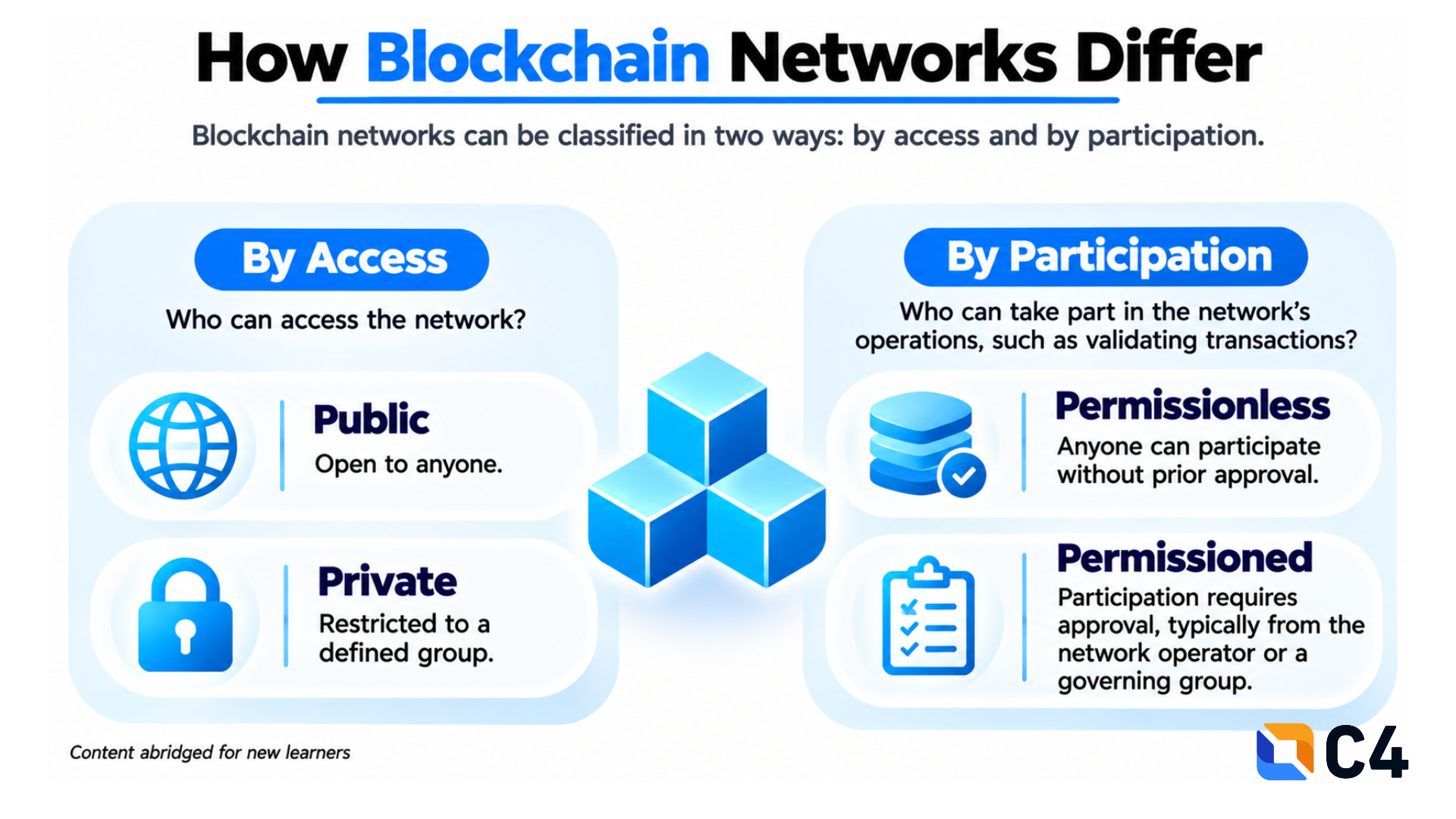
Not all blockchain networks operate the same way. Some are open to anyone, while others restrict access to a specific group. Networks also differ in who can participate in activities like validating transactions.
You may hear blockchains described as public, private, permissionless, or permissioned. These terms aren’t mutually exclusive. For example, a blockchain can be both public and permissioned.
Cryptocurrency Wallet Basics
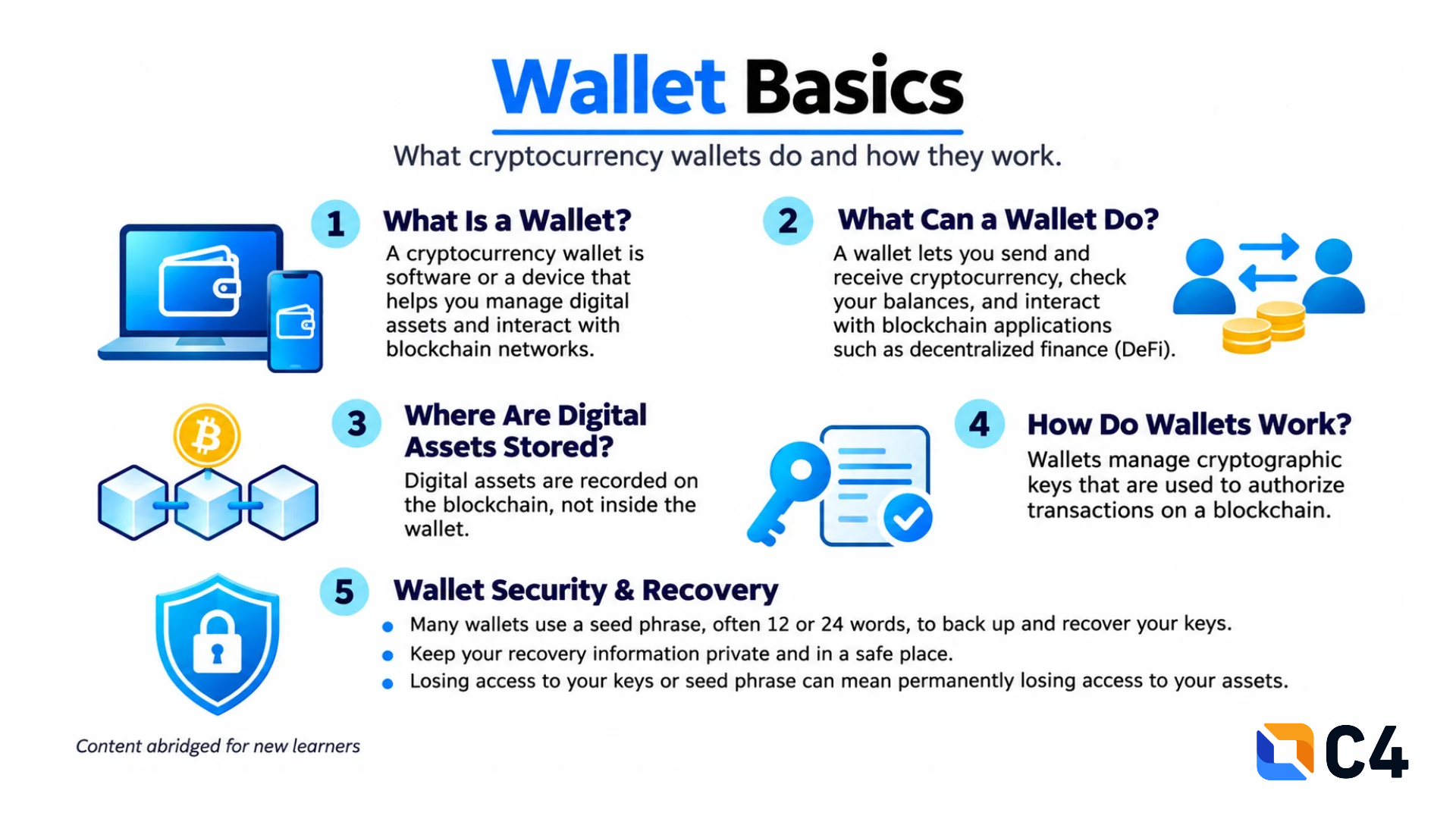
Cryptocurrency wallets allow people to send, receive, and manage digital assets on blockchain networks. Unlike a physical wallet, a cryptocurrency wallet doesn’t actually hold the assets. Instead, it manages the cryptographic keys used to access and control them.
Understanding Wallet Types
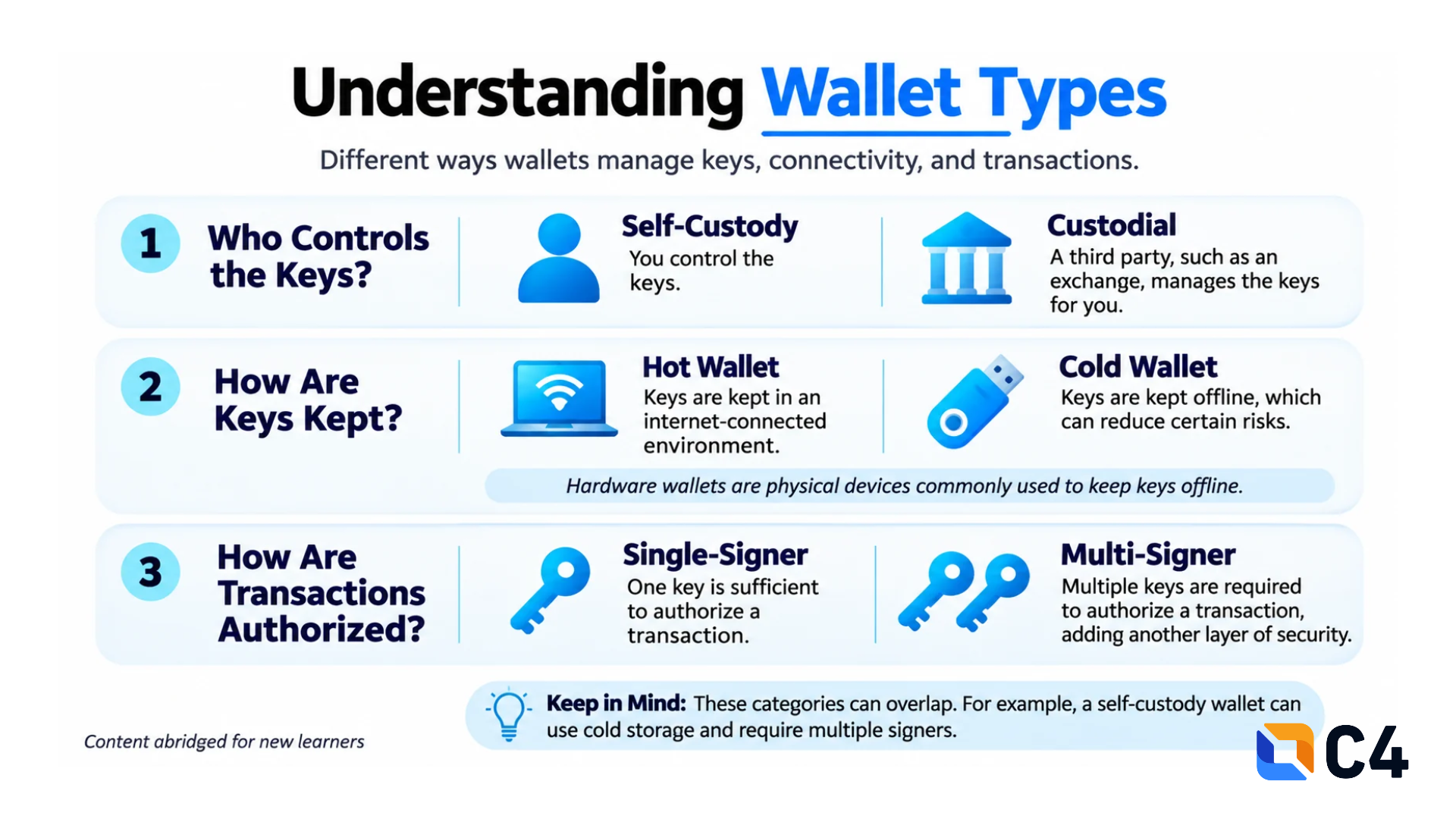
There are several types of cryptocurrency wallets, each with different features and security considerations. Some give users control over their own keys, while others rely on a third party. Wallets also differ in how keys are stored and how transactions are authorized.
How Blockchain Technology is Used
Blockchain technology is best known for cryptocurrency, but its uses go beyond sending and receiving digital assets. Today, blockchain networks support financial applications, digital ownership, and new ways to record and verify information.
Some applications, like cryptocurrency trading and stablecoin transfers, are already widely used. Others, including real-world asset tokenization and supply chain tracking, are still developing.